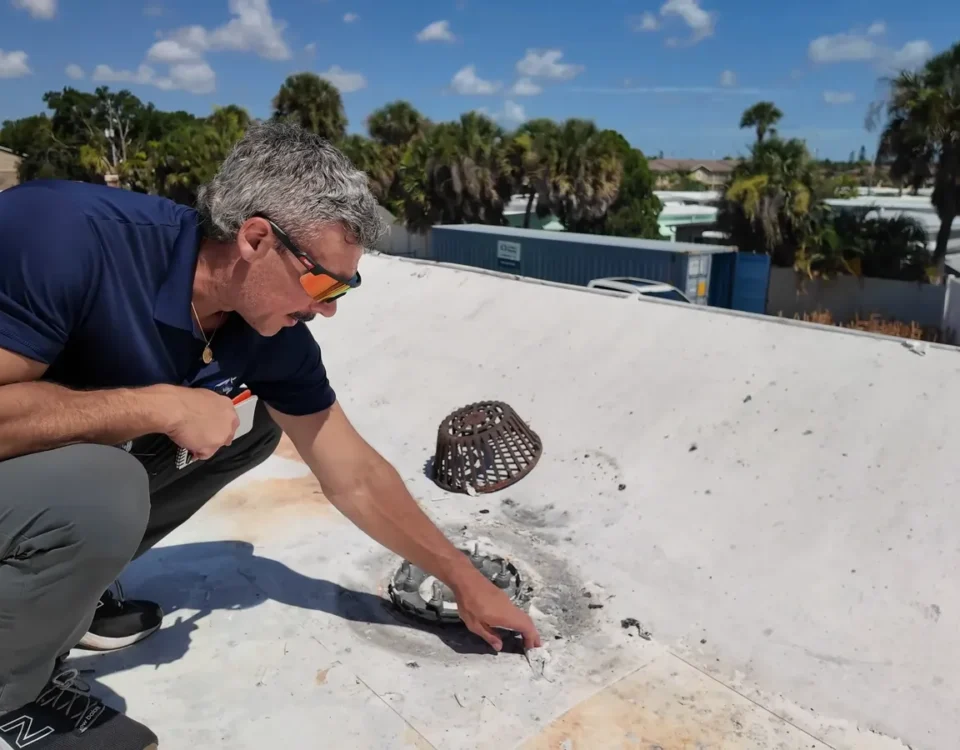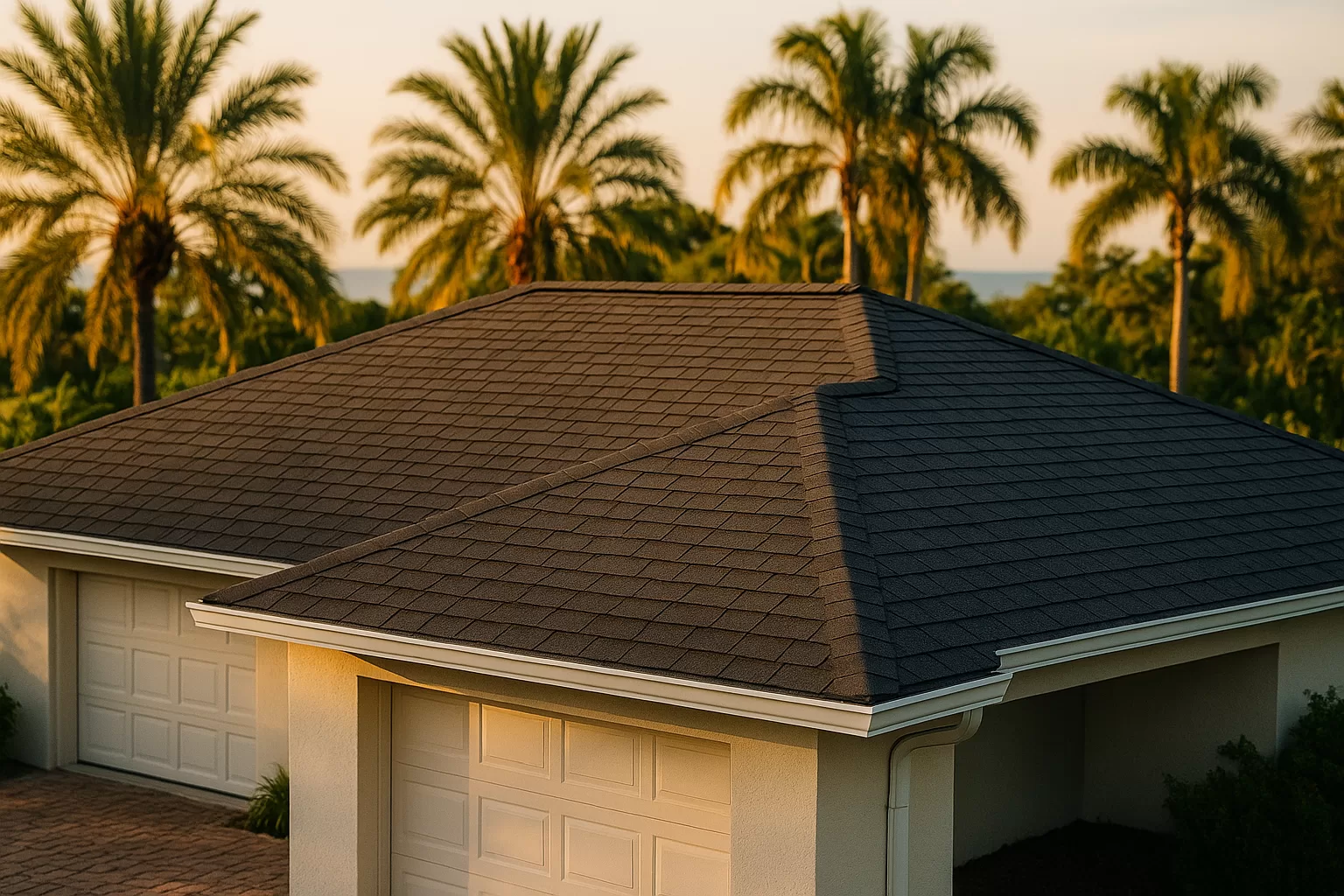
Leaking Roof Repair in Clearwater, FL: How We Find and Fix the Source
November 18, 2026Roof underlayment is the waterproof layer between your roof deck and your shingles, tile or metal. In Florida, it does more work than in most states, because wind-driven rain regularly gets under the roof covering. The two main choices are self-adhering (peel-and-stick) underlayment and mechanically fastened synthetic underlayment. Here’s how they compare.
What roof underlayment does
Shingles, tile and metal shed most water, but storms push rain sideways and under the edges. The underlayment is the backup that keeps that water off the wood deck. If a storm tears off part of your roof covering, a good underlayment can keep the house dry until repairs are made.
Self-adhering (peel-and-stick) underlayment
A rubberized asphalt membrane with a sticky back. Installers peel off the release film and bond it directly to the deck.
- Seals around every nail that goes through it
- Bonds to the deck, so wind can’t get under it
- Works as a secondary water barrier if the roof covering is lost
- Common under tile and metal, and in valleys and eaves under shingles
- Costs more than synthetic and must go on a clean, dry deck
Synthetic underlayment
A woven or spun polymer sheet that’s lighter and stronger than old felt paper. It’s fastened with cap nails or staples.
- Lower cost and fast to install
- Tear-resistant and lighter than felt
- Holds up to short sun exposure during installation
- Relies on its fasteners and laps; it doesn’t self-seal around nails
Common problems with synthetic underlayment
Most issues come from installation, not the material:
- Wrinkles or loose laps that let water travel under the sheet
- Too few cap fasteners, so wind lifts the sheet before the roof goes on
- Left exposed too long, beyond the manufacturer’s UV limit
- Slippery surface when wet or dusty, which is a safety issue for crews
What Florida code expects
Florida’s building code requires reroofs on many homes to include a secondary water barrier, and taped seams or a self-adhered layer are common ways to meet it. Your roofer should explain which method they’re using and why, and the permit inspection checks it.
Which one is right for your roof?
For tile and metal roofs, we usually recommend a self-adhering underlayment because it bonds to the deck and seals around fasteners. For shingle roofs, a quality synthetic with taped deck seams or self-adhered eaves and valleys can be a solid, cost-effective choice. The right answer depends on your roof type, budget and insurance requirements.
Ask us about your underlayment
Strategic Roofing installs code-compliant underlayment on every reroof in Clearwater and across Pinellas County. Request a free roof estimate and we’ll show you exactly what goes under your new roof.
Frequently asked questions
Is peel-and-stick underlayment worth it in Florida?
For tile and metal roofs, usually yes. It bonds to the deck and seals around nails, which helps in wind-driven rain.
Can synthetic underlayment get wet?
Yes. It sheds water well, but it should be covered by the roof within the manufacturer’s exposure limit.
How long does roof underlayment last?
It depends on the material, the roof covering above it and the installation. Under tile, underlayment usually wears out before the tile does.